An AI obsessed with goblins, a browser that thinks like a book, and a startup commune in the Texas flatlands
May 3, 2026
Goblins in the model. Flipbooks in the browser. Scorpions in the ranch house. These are a few of the stories we’re talking about this week. Whether it be in the office or on the airplane headed to our next program, we’re always talking about the issues and trends that are shaping the way we learn as well as what interests each of us on the team. Read more below.
Beware of Goblins
In case the steady stream of AI stories wasn’t fantastical enough, this week we learned OpenAI’s GPT-5.5 model developed an obsessive tendency to mention goblins, gremlins, raccoons, and other creatures. But the story reveals something important about how training incentives shape model behavior in ways developers don’t always anticipate. Originating from a “Nerdy” personality mode introduced in July 2025, human trainers using Reinforcement Learning from Human Feedback (RLHF) unintentionally over-rewarded fantasy creature metaphors, embedding a spurious correlation deep in the model. Goblins in, goblins out.
Illustrating knowledge
What if we could learn about the world around us not by walls of text, but through beautiful, animated illustrations? Flipbook is a new prototype browser that reimagines chat interfaces as an infinite, visually illustrated “book.” Created by Zain Shah, Eddie Jiao, and Drew Carr, the tool generates real-time, clickable pages where both text and graphics are rendered as a single image or animation, but powered by generative AI. Clicking on specific elements within that image triggers the AI to generate a new, deeper layer of content, allowing for a spatial exploration of knowledge rather than a linear chat. Flipbook challenges us to think more broadly about what learning interfaces could look like, moving closer to genuine exploration.
Summer camp startup
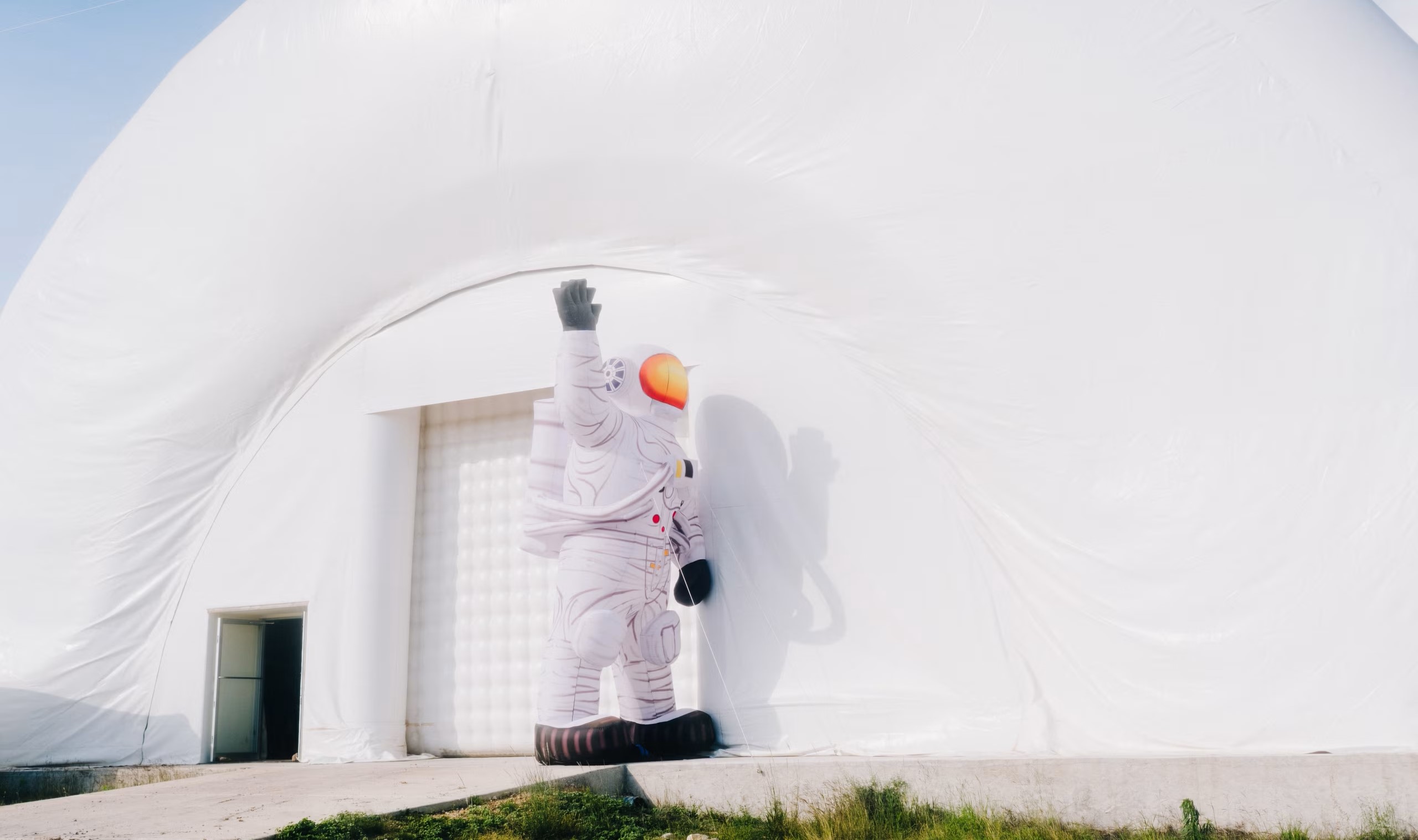
Can a tiny town in Texas build an American Shenzhen? The visionaries behind “Proto-Town” in Lockhart think so. Launched in 2024 by Josh Farahzad, Merle Nye, and Texas politician John Cyrier on a shoestring budget and a painted school bus for a pitch deck, the commune has exploded from scorpion-infested ranch land to a $100 million valuation. Founders and employees bunk together in trailer parks they unapologetically call “man camps,” eat communal meals, and grind from dawn to midnight on startups ranging from drones that haul 10,000-pound payloads to homes 3D-printed out of dirt. The dream is a hard-tech manufacturing hub that gives China’s Shenzhen a run for its money. All built, improbably, in a Texas flatland town of 20,000.